 Dads Journey
Newborn care for dads comes down to ten hands-on skills: holding, burping, swaddling, diapering, cord care and the first bath, safe sleep setup, feeding support, soothing, checking for fever, and car seat use. None of them is hard, and all of them get easier if you practice before the baby arrives.
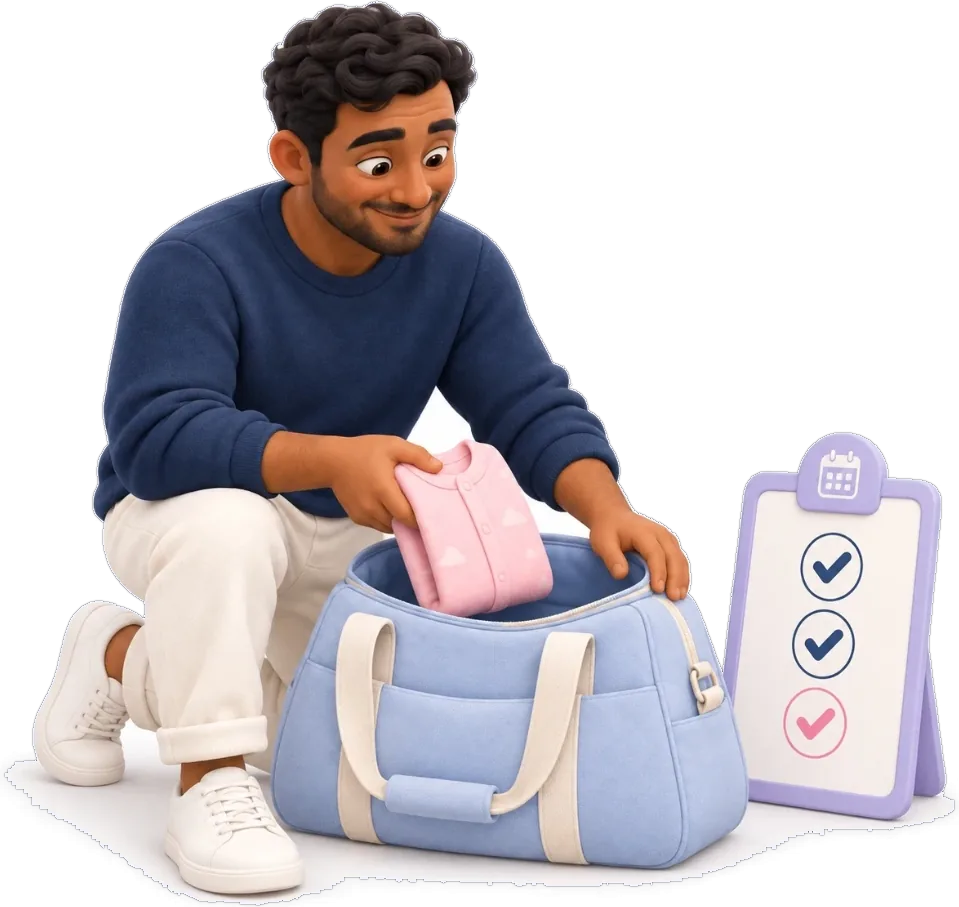
Nobody is born knowing how to hold a newborn. Ask a nurse to show you in the hospital, practice on a doll or a rolled towel at home, and treat the checklist at the end as your pre-baby homework.
The 10 skills, step by step
1. How to hold a newborn
Wash or sanitize your hands first. Then slide one hand under the head and neck and the other under the bottom, and bring baby close to your chest. Newborns can't hold their heads up, so the head and neck always need support. Three holds to practice: the cradle (head in the crook of your elbow), the shoulder (head resting on your shoulder, one hand under the bottom), and the football (baby along your forearm, face-down, cheek in your palm). Never shake a baby, and hand baby to someone else if you're frustrated.
2. How to burp a baby
Burp during and after feeds. Try three positions: baby upright against your shoulder, sitting on your lap with one hand supporting the chin and chest, or face-down across your lap. Pat or rub the back gently. If nothing comes up after a minute or two, that's fine; move on and try again later.
3. How to swaddle
Lay a square blanket in a diamond shape, fold the top corner down, and place baby with shoulders just below the fold. Wrap one side across the body and tuck it under, fold up the bottom, then wrap the other side. Keep it snug around the chest but loose around the hips so the legs can bend and move. Per the American Academy of Pediatrics (AAP), stop swaddling as soon as baby shows signs of trying to roll over, often around two months.
4. Diaper changes
Lay baby on a flat, safe surface and keep one hand on baby at all times. Open the diaper, wipe front to back, lift the legs gently, slide the clean diaper under, and fasten it. Fold the front down below the umbilical stump while it's still attached. Our guide to what normal baby poop looks like will save you a few panicked phone calls.
5. Cord care and the first bath
Until the umbilical stump falls off (typically within one to three weeks), stick to sponge baths: warm water, a soft cloth, one body part uncovered at a time, in a warm room. Keep the stump clean and dry, and call the pediatrician for redness, swelling or a bad smell. Never leave a baby alone in or near water, even for a second.
6. Safe sleep setup
This one matters most. The AAP and the UK's NHS give the same core advice: baby sleeps on their back, on a firm, flat surface in their own crib or bassinet, with no pillows, loose blankets, bumpers or toys, and in your room (not your bed) for at least the first six months. Learn it before the first night, and see our newborn sleep routines for dads for what to do at 3 a.m.
7. Feeding support
Whether baby is breastfed, formula-fed or both, you have a job. The World Health Organization (WHO) recommends exclusive breastfeeding for the first six months where possible, and a lot of that depends on a dad who handles burping, diaper changes, water and snacks. If you give bottles, hold baby semi-upright and tip the bottle just enough to keep milk flowing slowly, pausing often. Our newborn feeding schedule guide explains what's normal.
8. Soothing a crying baby
Crying is how newborns talk. Work through the basics first: hungry, wet, tired, too hot or cold. Then try the well-known "5 S's": swaddle, side or stomach hold (only while baby is awake and held), shush, swing gently, and suck. Skin-to-skin also helps; see our skin-to-skin guide for dads.
9. Taking a temperature
Know how to use a digital thermometer before you need it. For babies under three months, a rectal temperature of 100.4°F (38°C) or higher is a reason to call the doctor right away, per standard pediatric guidance. Don't give medication to a newborn unless a doctor says so.
10. Car seat and carrier basics
Install the rear-facing car seat early and have it checked by a certified technician if your area offers it. Practice buckling a doll in so the harness sits snug, with straps at or below the shoulders. If you'll use a carrier, make sure baby's face is visible and the chin is off the chest; our baby carrier guide for dads covers options.
Your printable pre-baby checklist
Tick these off before the due date:
- Practiced the cradle, shoulder and football holds
- Burped a doll in three positions
- Swaddled a blanket-wrapped doll without a loose end
- Changed a pretend diaper in under two minutes
- Read the safe sleep rules and set up the crib
- Asked the nurse to demo a sponge bath
- Learned how to use the thermometer
- Installed the car seat and had it checked
- Saved the pediatrician's number in your phone
- Packed your hospital bag
What do dads say about their first week?
This isn't a real quote. It's a composite of what many new dads describe: "I was scared of breaking her. By day three I could swaddle in the dark. I just needed reps." Confidence comes from repetition, not from a perfect first try.
How long should I practice before the baby arrives?
Aim for a few short sessions in the third trimester, ten or fifteen minutes each. Practicing on a doll builds muscle memory, and your hospital or prenatal class can add hands-on coaching. If you have questions mid-practice, ask DadBot, the AI assistant in Dad's Journey, or your pediatrician.
When should I call the doctor about my newborn?
Call right away for a fever of 100.4°F (38°C) or higher, trouble breathing, a baby who is hard to wake or won't feed, fewer wet diapers than expected, yellowing skin that's getting worse, or anything that simply feels wrong. This guide is general information, not medical advice. Always follow your care team's instructions.