 Dads Journey
The Job Every Dad Gets Handed in Active Labor
At some point in the third trimester, you will get handed one very specific job: watch the clock and time the contractions. It sounds simple until you're actually doing it at 3am, half-asleep, while your partner is breathing through pain and you're fumbling with your phone trying to remember if you're supposed to time from the start of one contraction to the start of the next, or the end to the start. This guide covers exactly how to time contractions, what the numbers actually mean, and how a contraction timer app takes the guesswork out of it.
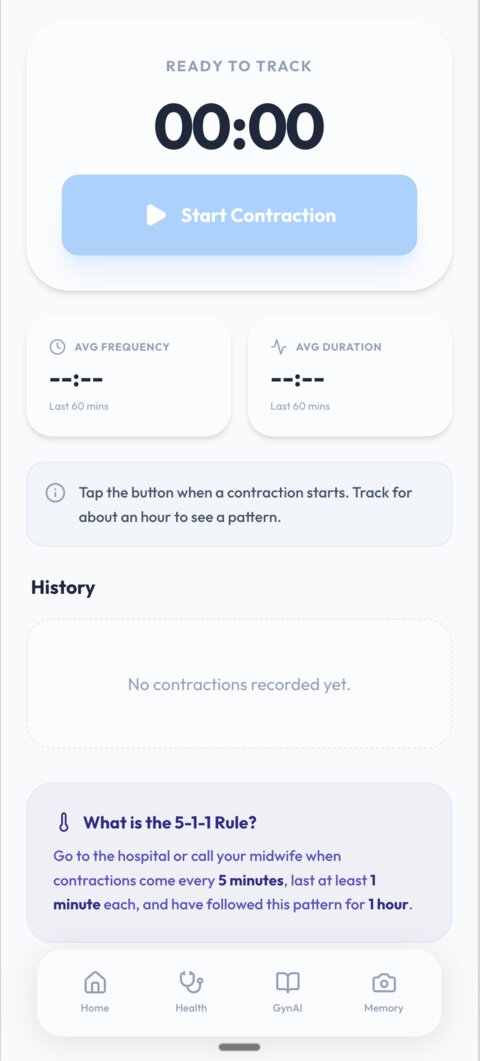
How to Time Contractions Correctly
Timing contractions means tracking two things for each one:
- Duration — how long the contraction itself lasts, from the moment it starts to the moment it ends.
- Frequency — how far apart contractions are, measured from the start of one contraction to the start of the next (not from when one ends to when the next begins).
Do this for several contractions in a row so you can see the pattern, not just a single data point. Early labor contractions are often irregular — different lengths, unpredictable gaps. As labor progresses, they typically become longer, stronger, and closer together.
The 5-1-1 Rule: When to Head to the Hospital
Most OBs and midwives use a simple benchmark called the 5-1-1 rule to know when active labor has likely started:
- Contractions are 5 minutes apart (from start to start)
- Each contraction lasts about 1 minute
- This pattern holds steady for at least 1 hour
If you're hitting 5-1-1, it's generally time to call your provider or head in. Every pregnancy and every provider is a little different, so this is a general guideline, not a replacement for whatever specific instructions your OB or midwife gave you — always follow their guidance first.
Why Timing Contractions by Hand Is Hard to Get Right
Doing this manually — with a stopwatch, a notes app, or scribbled numbers on a napkin — is exactly the kind of task that falls apart under pressure. You're tired, your partner needs your attention, and doing mental math on interval times while someone is in pain next to you is genuinely difficult. It's easy to lose track, forget to start the timer, or misremember whether you're 4 minutes apart or 6.
How Dad's Journey's Contraction Counter Works
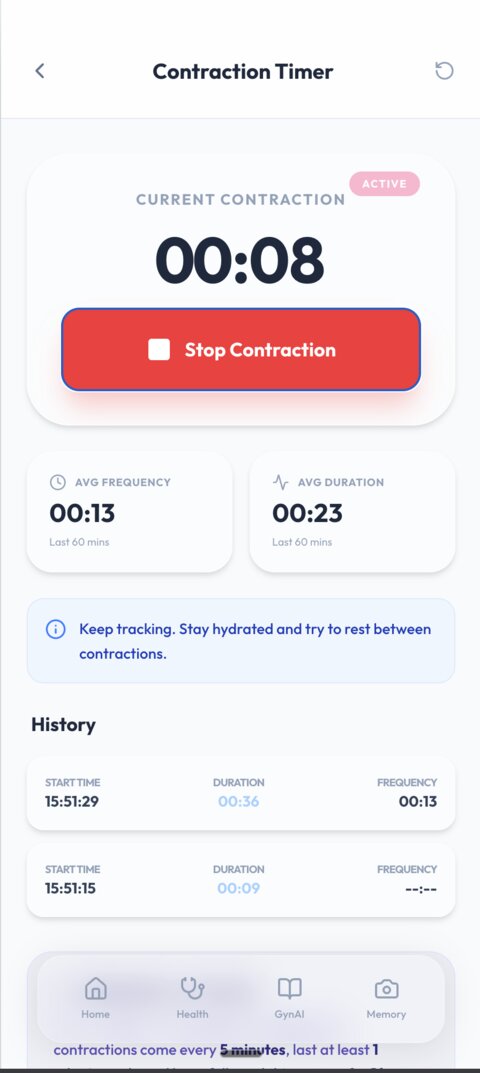
This is exactly why we built a Contraction Counter directly into Dad's Journey. Instead of juggling a stopwatch and doing mental math, you tap once when a contraction starts and once when it ends. The app automatically:
- Logs the duration of each contraction
- Calculates the interval between contractions
- Builds a running history so you can see the pattern at a glance — no mental math required
- Shows you clearly when the pattern is trending toward the 5-1-1 range
It turns "I think we might be close" into an actual, visible pattern you can point to when you call your provider. One dad using it during early labor told us it "helped keep us both calm and focused" — which is really the whole point. Your partner has enough to focus on. The clock shouldn't be one more thing on her mind.
What Else to Have Ready Alongside Your Timer
Timing contractions is usually just one piece of the "is this really happening" moment. A few things worth having sorted before you need them:
- Hospital bag packed and by the door
- Route to the hospital and parking plan (including a backup route)
- Your provider's after-hours number saved and easy to find
- A charged phone — timing contractions all night will drain your battery fast
The Bottom Line
You don't need to memorize labor math or trust your half-asleep brain to do interval calculations correctly. Time the contractions, watch for the 5-1-1 pattern, and let a tool built for exactly this moment do the tracking so you can focus on your partner instead of your stopwatch.
Dad's Journey's Contraction Counter is built into the app alongside week-by-week guidance, feeding logs, and 24/7 AI parenting support from GynAI — everything you need in one place for the moment labor actually starts.