 Dads Journey
The 2am Voice Memo I Almost Didn't Save
It was 2:14am, my kid had just done that half-laugh, half-hiccup thing newborns do in their sleep, and I grabbed my phone to record ten seconds of it before I forgot. I almost talked myself out of it — it's the middle of the night, I'm exhausted, who's even going to listen to this. I saved it anyway.
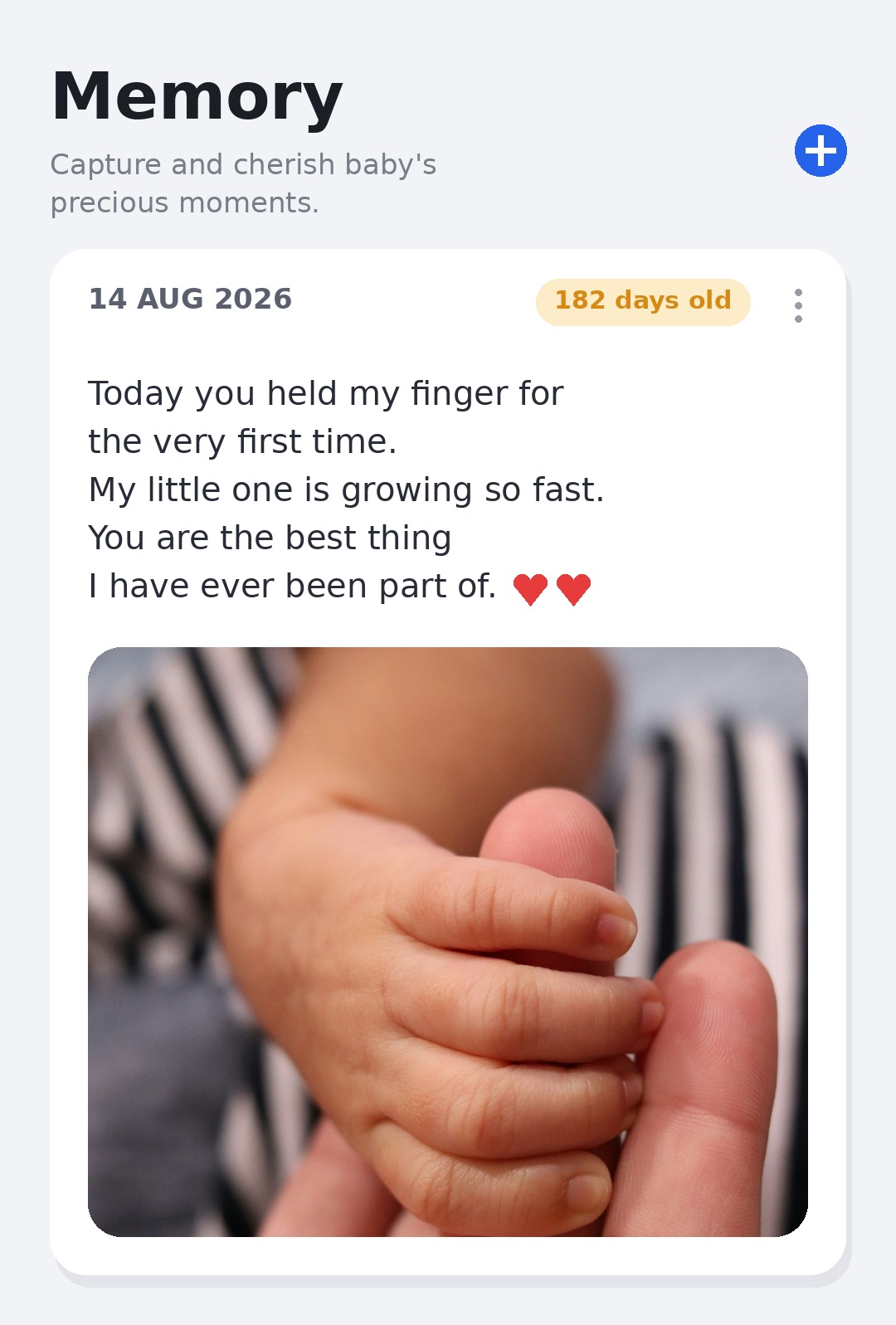
Turns out that instinct — stop, notice, capture — isn't just sentimental. There's actual research behind why writing things down, snapping the photo, or recording the voice memo does something real to your brain, your bond with your kid, and even your kid's brain down the line. Here's the science, and why it's the whole reason the milestone journal exists in the app.
Putting Feelings Into Words Actually Calms Your Brain
There's a solid body of research on something called expressive writing — basically, writing down what you're thinking and feeling about an experience instead of just letting it churn around in your head. Studies on it have found something counterintuitive: people who write about a stressful or emotional experience show measurable gains in working memory afterward, and a drop in the kind of intrusive, looping thoughts that keep you up at night.
The mechanism makes sense once you hear it: when a thought stays unprocessed, your brain keeps spending energy trying to resolve it. Writing it down — even three sentences — seems to let your brain file it away as "handled," freeing up mental bandwidth for everything else. For a new dad running on four hours of sleep and a head full of half-formed worries, that's not a small thing. A thirty-second journal entry isn't just a nice memory-keeping habit. It's a legitimate way to offload stress.
The Bonding Chemistry of Slowing Down
Separately, there's a well-established line of research on oxytocin — sometimes called the "bonding hormone" — and what triggers it in parents. It's not released just from proximity to a baby. It's tied specifically to engaged contact: touch, sustained eye contact, and synced-up interaction between parent and child. Studies on parent-infant bonding consistently show that these small moments of focused attention — not passive presence — are what move the needle on oxytocin and, with it, felt closeness and lower stress hormones for both of you.
Here's the connection: the act of stopping to capture a moment — really looking at your kid's face to describe it, holding them still for the photo, noticing the specific sound they made — forces exactly that kind of engaged attention. You can't write "she did this incredible thing with her eyebrows" without actually watching the eyebrows. The journaling itself becomes a small ritual of the exact behavior the bonding research points to.
Why This Still Matters When They're Five, Not Five Weeks
The longer-term payoff might be the most surprising part. Developmental psychologists have spent decades studying what's called elaborative reminiscing — basically, how parents talk with their kids about shared memories as the kids get older. Parents who revisit past moments in specific, detailed ways ("remember when we went to the park and the dog stole your sandwich?") rather than vaguely, tend to have kids who develop stronger autobiographical memory, better emotional regulation, and — this is the part that got my attention — more secure attachment overall.
In other words, the stuff you save now isn't just for you to get misty-eyed over later. It's raw material. Every specific, detailed entry — not just "good day today" but "she army-crawled across the living room chasing the dog" — becomes something you can hand back to your kid in five years as a real, textured memory instead of a fuzzy generality. You're not just journaling for yourself. You're building your future toddler's sense of their own story.
Where the Milestone Journal Fits
This is the whole reason the milestone journal in the app isn't just a photo dump. It's built to make the capturing easy in the moment — a photo, a thirty-second voice note, a quick line about a first — because the research says the small, specific version beats the vague, delayed version every time. You don't need to write a paragraph at 2am. You need ten honest seconds before the moment evaporates.
If you've got a backlog of photos on your phone that never made it anywhere, or a memory from this week you keep meaning to write down, that's the one to start with tonight. Not the polished version — the real one, eyebrows and all.